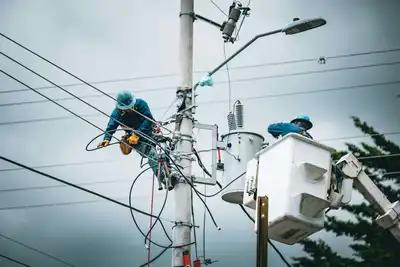
How is workforce compliance changing in 2026?
In 2026, compliance has shifted from manual record-keeping to real-time digital verification. Key hurdles include stricter OSHA electronic reporting, NFPA 70E risk assessment mandates, and the industry-wide transition to A2L refrigerant certifications.
Executive Summary: The State of Compliance in 2026
In 2026, workforce compliance is no longer an administrative task—it is a core operational metric. With the rise of stricter OSHA mandates and the integration of AI-driven safety monitoring, the "spreadsheet era" has ended.
📋 2026 Readiness Checklist
- Digital Wallet for every technician configured?
- 90/60/30 day automated alert sequence active?
- Trade-specific micro-certs (A2L, NFPA, EVITP) identified?
- Mobile photo-proof upload workflow tested?
- Public 'Audit-Ready' link generated for GCs?
Tip: If you checked fewer than 3, your business is at high risk for a 2026 audit failure.
4. Industry-Specific Requirements & 2026 Hurdles
4.1 Electrical Contractors: The NFPA 70E & EV Infrastructure Crunch
The 2026 landscape for electrical contractors is defined by the intersection of high-voltage safety and the green energy transition. The primary hurdle is no longer just holding a license; it is the "Micro-Certification" verification.
The NFPA 70E 2026 Shift: The latest 2026 revisions to NFPA 70E have effectively eliminated the use of "generic" PPE tables for most commercial and industrial tasks. Instead, OSHA and the NFPA now mandate a site-specific Incident Energy Analysis. For contractors, this means that every journeyman on a job site must demonstrate current training in Arc Flash Label Interpretation. If an inspector finds a technician working on a panel without the ability to explain the incident energy values on the specific equipment label, the company faces a "Willful Violation." This shift requires a continuous training loop, as labels vary by manufacturer and installation date.
The EV Infrastructure Hurdle: The nationwide rollout of Level 3 DC Fast Chargers has created a massive demand for the EVITP (Electric Vehicle Infrastructure Training Program) certification. In 2026, many federal and state-funded projects require that at least 50% of the on-site electrical workforce holds this specific credential. Tracking this alongside traditional state renewals has become a nightmare for admins. A technician might be a Master Electrician in good standing, but without the EVITP micro-cert, they are legally a liability on a charging station project.
4.2 HVAC & Plumbing: The A2L Refrigerant & EPA 608 Era
For the HVAC sector, 2026 marks the climax of the Great Refrigerant Transition. The industry has fully pivoted to A2L (mildly flammable) refrigerants, creating a massive training and documentation gap.
The A2L Safety Hurdle: Because A2L refrigerants (like R-454B and R-32) carry a flammability rating, the EPA and local fire marshals have introduced stringent "Safe Handling and Transport" requirements. A legacy EPA 608 card is no longer sufficient. Technicians must now hold an A2L Safety Endorsement. In 2026, we are seeing "Van Audits" where EPA inspectors stop service vehicles to verify that every technician has been trained on the specific mitigation of flammability risks during recovery and charging.
Medical Gas & Plumbing Liability: In plumbing, the hurdle is the ASSE 6010 Medical Gas Installer certification. With the aging population driving a hospital construction boom, the demand for "Med-Gas" qualified plumbers has tripled. However, these certifications require strict "continuity logs"—if a plumber hasn't performed med-gas work in a six-month window, their cert can be challenged. Manually tracking "work history continuity" alongside expiration dates is the leading cause of project delays in 2026.
4.3 General Contractors: Subcontractor Liability & Gatekeeping
For GCs, the hurdle has shifted from managing their own team to managing the Subcontractor Liability Gap.
The "Flow-Down" Liability Hurdle: In 2026, insurance carriers have perfected the "Right of Subrogation." If a subcontractor’s employee is injured, the insurance carrier will immediately audit that specific employee’s OSHA 30 and Fall Protection training history. If that training was expired by even a single day, the insurance carrier will attempt to push the entire liability onto the General Contractor for "failure to maintain a safe work site."
Digital Gatekeeping: The biggest hurdle for GCs is the move toward Digital Access Control. Large project owners (Amazon, Google, Federal Gov) now require GCs to use turnstiles linked to a digital compliance database. If a sub's technician tries to scan in and their safety card is expired in the system, the gate stays locked. GCs are now forcing subs to use platforms like AutoInSync to provide a "live feed" of compliance, as they can no longer afford the administrative cost of manually verifying 200+ workers every morning.
4.4 Heavy Equipment & Crane Operations: The NCCCO Digital Mandate
Heavy equipment operators face the highest legal stakes. In 2026, the "Paper Card" is officially dead, replaced by the NCCCO Digital Credentials system.
The NCCCO Continuity Hurdle: Tracking NCCCO cards is uniquely difficult because they often have staggered expiration dates for different equipment classes (e.g., Lattice Crawler vs. Small Telescopic). A major 2026 hurdle is the Operator Qualification (OQ) Log. OSHA now expects companies to prove that the operator hasn't just been "certified" in the past, but has been "evaluated" on the specific make and model of the machine they are running today.
The Inspection-Link Hurdle: The legal trend in 2026 is linking the Daily Equipment Inspection to the operator’s credentials. If a crane accident occurs and the daily log was signed by someone with an expired or "suspended" cert, the company faces "Gross Negligence" charges. Companies are solving this by placing QR codes on every machine cab; if the scan shows a "Red" status, the machine remains locked out. Ensuring that "The Machine and The Man" are both compliant in real-time is the defining hurdle of 2026 heavy operations.